

project update 2024
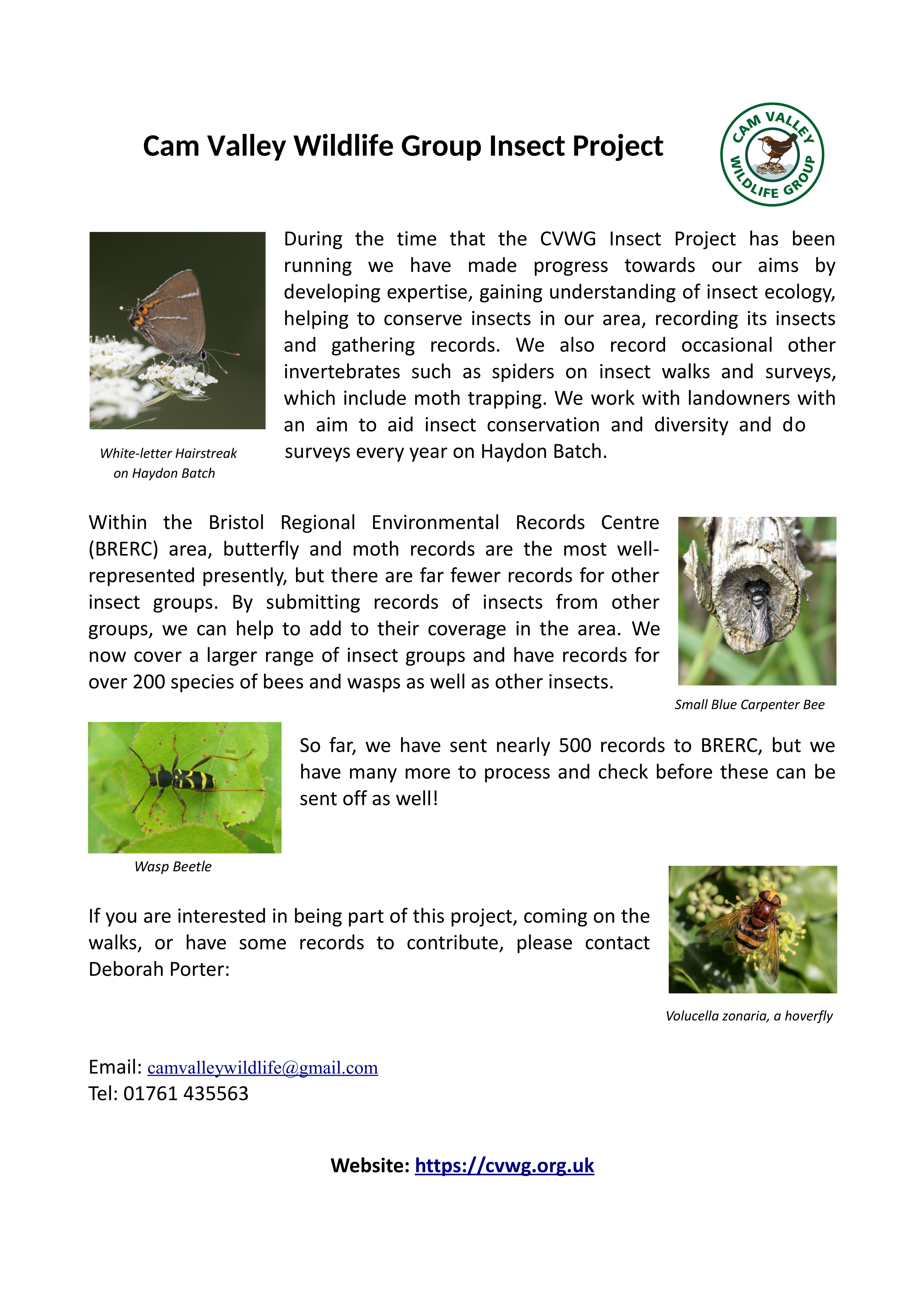
Project leaflet download: click here.
Insect records – how do we process them?
CVWG has a data policy for non-personal information, which is included in our Data Protection Policy. All personal information is subject to the Data Protection Act 2018 and no personal data will be passed on with records to a third party without the consent of the person whose data it is. The records go through a process of validation in order to ensure their accuracy as much as possible before sending them to the official records centres, where they will go through a second validation process.
Official records of insects in our area are held in the Bristol and Somerset regional records centres, BRERC and SERC. Within the BRERC portion of our area, butterflies and moths are the most well-represented records, with records in almost every tetrad. Other insect records are far less frequent and generally are in small numbers. Large numbers of a group in a particular tetrad seems to relate mainly to whether there is a wildlife site present, or the home of a recorder!
We are always pleased to receive records of insects in our area and will try to identify insects from photographs where possible. If you wish to submit a record/records please go to our Records and Recording Forms page. If you encounter any difficulty downloading a form, please contact Deborah (contact details below).
If you are interested in being part of this project or for further information, please contact Deborah Porter via email at camvalleywildlife@gmail.com or telephone on 01761 435563
Insect information
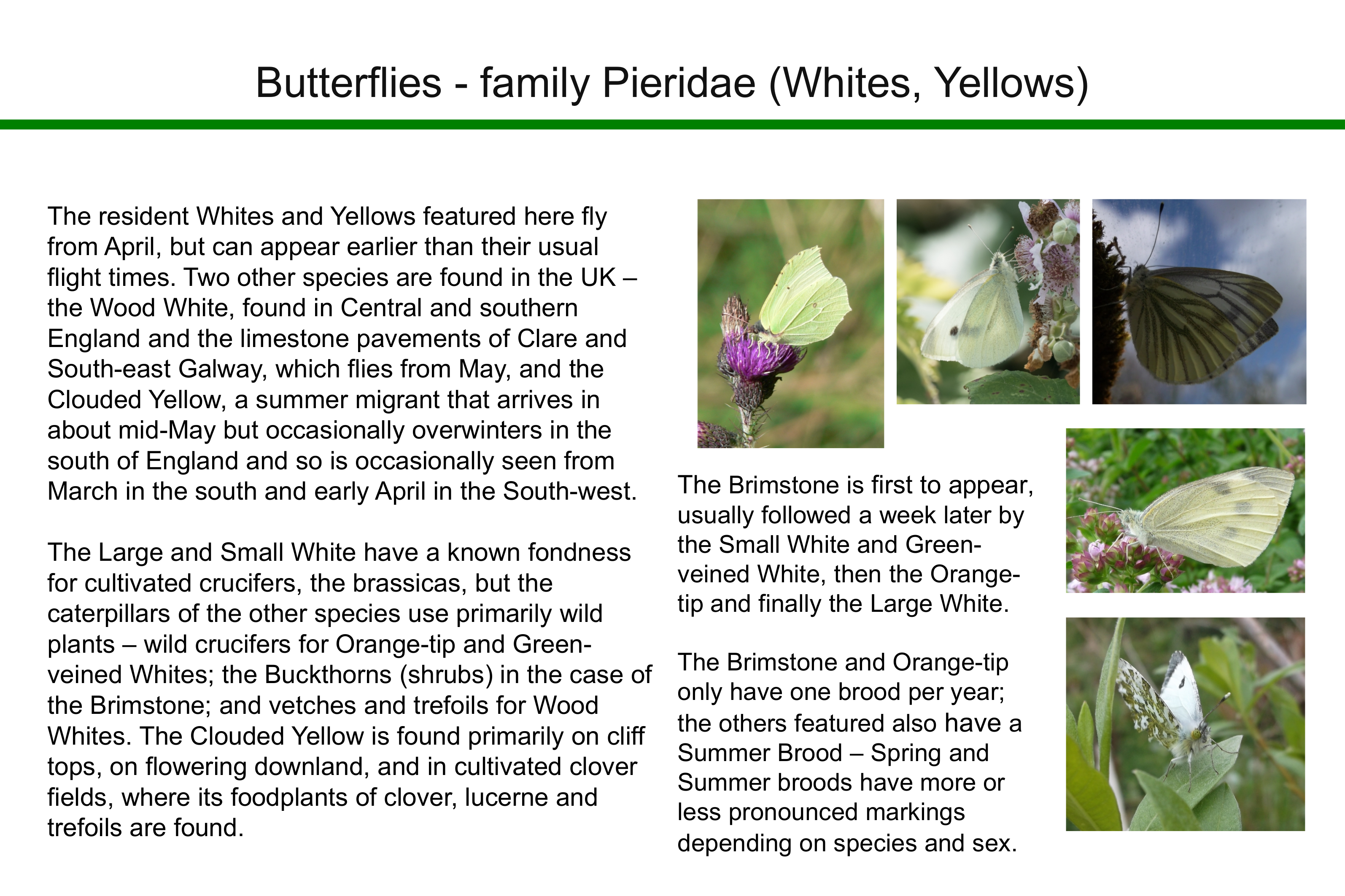
This section includes a guide to the White and Yellow butterflies you will see in spring and some general information about insects in the area.
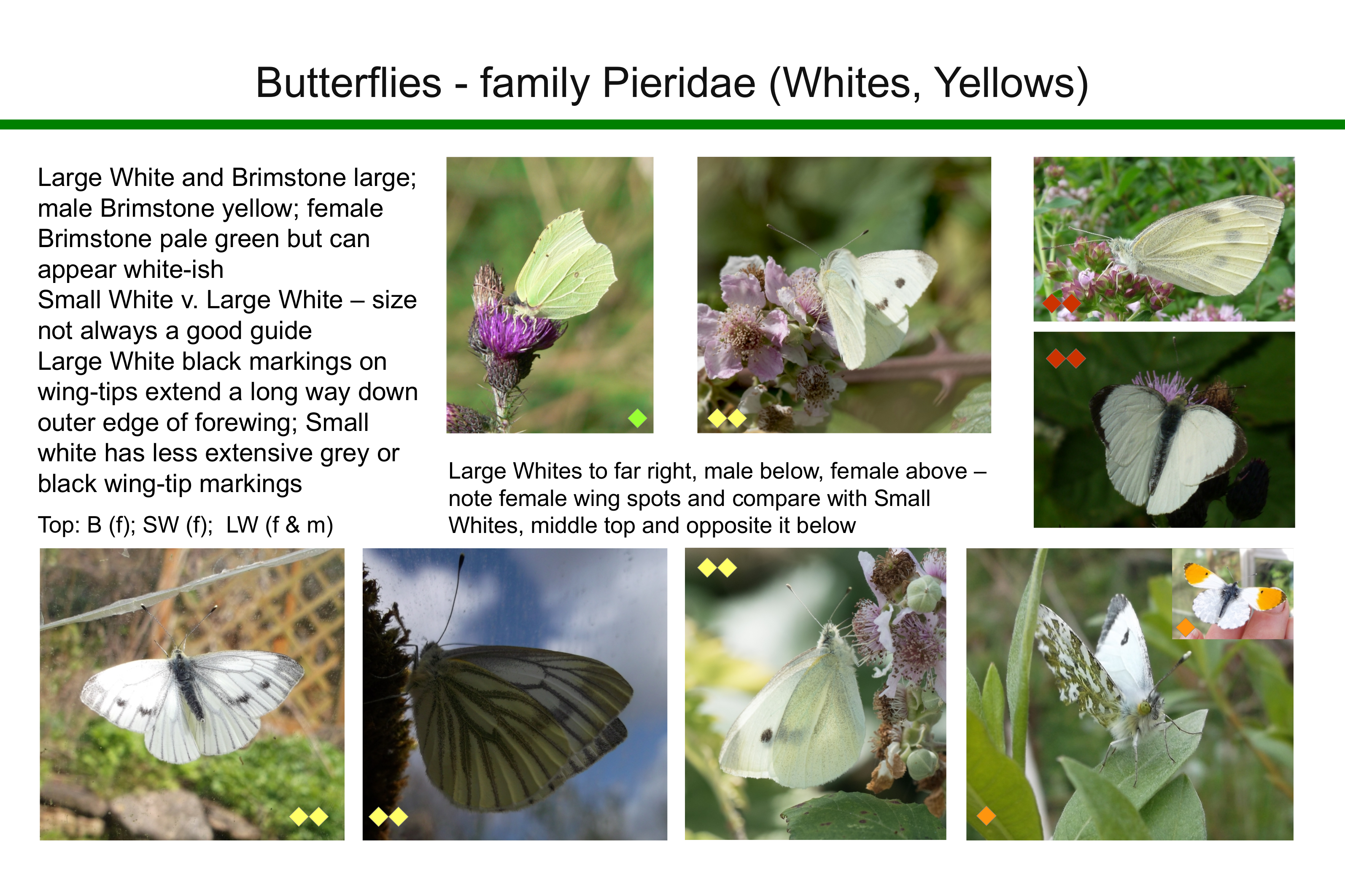
Spring butterflies – the Whites and Yellows
If you have you even been confused about which White you are looking at, which can be particularly challenging in the case of some females, then you might find the printed slides below helpful.
The photos are dpi reduced, but should not be reproduced without obtaining permission. If you wish to use the slide images below for personal use as a reference, however, that’s fine.

Insects of the CVWG area, past and present
The invertebrate value of the Cam Valley Wildife Group area went largely unnoticed until the discovery of a remarkable number of rare and scarce insects and other invertebrates on Radstock Railway Land and Wagon Works, a unique high value refuge site with special qualities, regionally important for its insect populations and supporting metapopulations of insects (populations over a wider area on a network of sites, some of which are small or transitory). The site, now sadly lost to development, mainly comprised UK Biodiversity Action Plan Priority Habitat Open Mosaic on Previously Developed Land at the hub of a local ecological network. The on-site and off-site ecological work and management promised as a condition of the permission to develop did not take place, compounding the already substantial impact upon the insect biodiversity of the area. However, insects in our area continue to use a range of different habitats including rivers and ponds, wet areas, neutral grasslands, acidic grassland on batches (old spoil tips), patches of calcareous grassland on former railway routes and sidings, woodlands, scrub, woodland edge, mixed habitat sites, farmland, public areas, gardens, wildlife projects, local Nature Reserves including Haydon Batch and managed sites like Goosard Reserve. Haydon Batch supports several UK Species of Principal Importance ( Section 41 species) and has a good amount of insect-friedly habitat. The rise in rewilding projects and the emergence of other managed habitats supporting immportant species in our area is very encouraging and is already making a valuable cotribution to insect diversity and conservation in the area.
 Cam Valley Wildlife Group